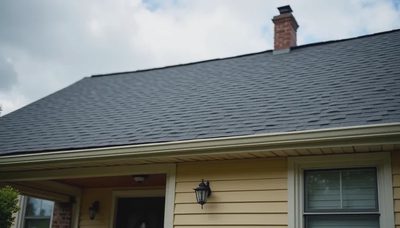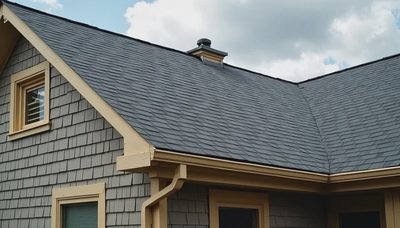
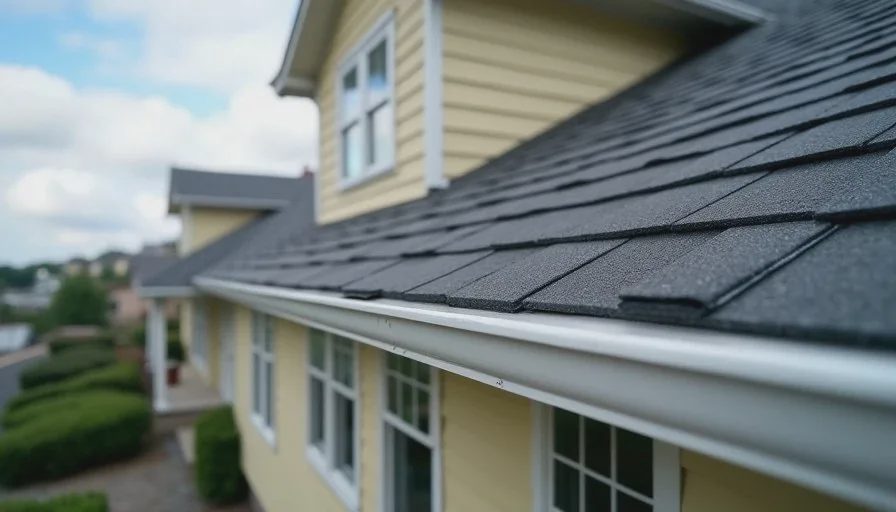
A new roof is a major investment. On an older house that investment sits on a structure that was built to earlier standards of ventilation, framing, and moisture control. The shingles themselves may be the same products used on newer homes, yet the environment beneath and around them is often different. The steps that help a new roof reach its expected service life therefore include more than the quality of the installation. They include the ongoing conditions the roof will live with for the next two decades.
I’m Heath Bannister. After more than a decade reviewing residential claims and contractor work on older homes, I saw the same patterns of early aging appear when the underlying conditions were left unchanged. Roofs that received ordinary surface care but continued to sit over poorly ventilated attics or clogged gutters tended to show problems sooner. Roofs that were paired with improved airflow, consistent debris control, and basic seasonal attention tended to perform closer to their rated life.
This article outlines the practical measures that make the largest difference after the crew has left.
Start With the Ventilation That Was (or Was Not) Improved
Many older attics were built with limited intake at the eaves and limited exhaust at the ridge. A new roof installed over the same restricted airflow simply inherits the previous heat and moisture load. Heat accelerates the breakdown of asphalt shingles from the underside. Moisture can condense on the decking and reduce its long-term integrity.
If the recent installation included continuous ridge vent, improved soffit intake, or baffles to keep insulation clear of the eaves, those improvements need to remain functional. Check that insulation has not been pushed back into the intake pathways. Confirm that ridge vents are not blocked by debris or by later attic storage. An attic that still feels markedly hotter than the outdoors on a warm day is signaling that airflow remains limited.
When ventilation was not upgraded during the roof work, the limitation remains. In that case the most useful long-term step is to treat ventilation as a separate improvement project rather than assuming the new shingles will overcome the old airflow pattern.
Keep the Gutters Working
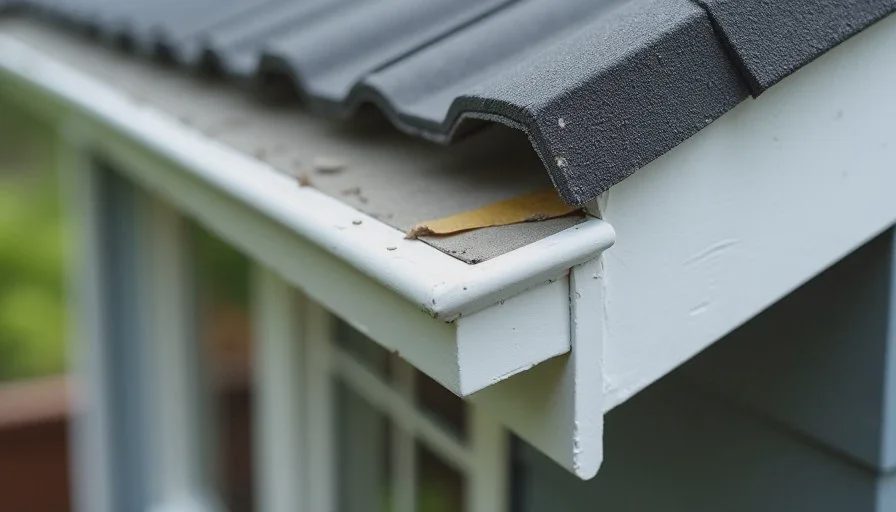
Gutters and downspouts are not part of the roof surface, yet they directly affect how long the lower edges of the roof and the fascia remain dry. Clogged gutters force water to back up against the drip edge and, in winter, can contribute to ice-related problems at the eaves. On older homes the fascia boards are often original and more vulnerable to repeated wetting.
A simple seasonal habit—clearing gutters in late fall and again in spring—protects both the new roof edge and the wood behind it. While clearing, check that downspouts are discharging water away from the foundation and that no sections have pulled loose from the fascia. These are small tasks. Their cumulative effect on the lower courses of shingles and on the roof-edge details is substantial.
Control Debris on the Surface
Leaves, pine needles, and branches that remain on the roof hold moisture against the shingles and block the natural shedding of water. On lower-slope sections or in valleys the accumulation can be especially persistent. Older houses are often surrounded by mature trees, so the debris load is frequently higher than on newer lots.
A visual check from the ground several times a year is usually enough to identify buildup. When debris is present, safe removal—either from a stable ladder or by a service—prevents prolonged contact between wet organic material and the new shingles. Valleys deserve particular attention because water is already concentrated there.
Maintain the Attic as a Dry, Temperate Space
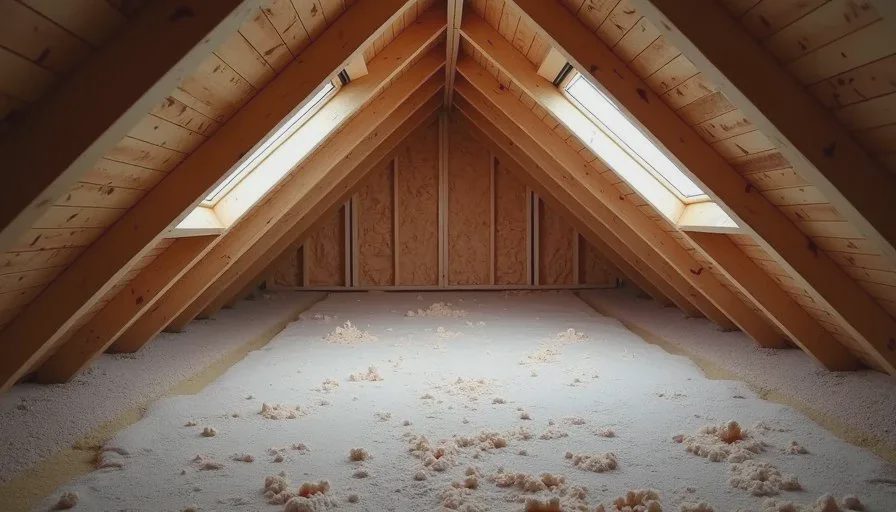
The underside of the new roof will only stay dry if the attic remains reasonably dry. After installation, make a point of looking into the attic a few times during the first year and then at least annually. Check for any signs of moisture on the underside of the decking, around penetrations, and along the eaves. Confirm that bathroom and kitchen exhaust fans are still ducted to the outside and not terminating in the attic.
Insulation should remain evenly distributed and should not block the soffit intake. On older homes insulation is often uneven or has been disturbed during previous work. Restoring a consistent layer reduces winter heat loss and summer heat gain, both of which affect the temperature the roof deck experiences.
Address Small Exterior Issues Promptly
New roofs can develop minor issues that are easy to correct early and harder to ignore later. A lifted shingle tab after a wind event, a small gap at a flashing transition, or a plumbing boot that begins to dry out are all examples. Walking the exterior after significant storms and looking at the flashings and penetrations from the ground (or from a safe ladder) allows these items to be noted while they are still small.
Most manufacturer warranties and contractor workmanship warranties expect reasonable maintenance. Documenting that small problems were addressed promptly also creates a useful record if larger questions arise years later.
Mind the Transitions and Penetrations
Older houses often have more complex roof-to-wall transitions, older chimneys, and a greater number of penetrations than newer construction. These locations are where water is most likely to find a path if the details move or age. Periodic visual checks of step flashing against siding, counter flashing at masonry, and the condition of boots and collars help catch movement or sealant failure before interior stains appear.
If the house has a masonry chimney, the crown and any cricket or saddle behind the chimney also deserve occasional attention. Water that enters at the chimney often travels some distance before it becomes visible inside, so the exterior condition of those details is worth monitoring.
Keep a Simple Record
A thin folder or digital album with the original contract, the product information for the shingles and underlayment, and a few dated photographs of the completed roof creates a useful baseline. Adding brief notes after seasonal checks or after any minor repairs keeps the history coherent. If a warranty question or an insurance discussion arises years later, that record is far more helpful than memory alone.
What Does Not Need Constant Attention
Not every aspect of a new roof requires frequent intervention. Walking on the surface more than necessary can do more harm than good. Aggressive chemical treatments are rarely needed and can void warranties. The most effective habits are the quiet ones: clear gutters, open ventilation pathways, dry attic, and prompt attention to small exterior changes.
A Practical Annual Rhythm
A sustainable approach might look like this:
Spring: Clear gutters, check for winter debris, look at flashings and penetrations from the ground.
Mid-summer: Brief attic check for heat and any moisture signs.
Fall: Clear gutters again before leaves fully drop, inspect valleys and lower edges.
After major storms: Visual exterior scan for lifted tabs or displaced flashings.
None of these steps requires specialized skill. Together they keep the environment around the new roof closer to the conditions the materials were designed to handle.
Why the Older House Needs Extra Attention
A new roof on a new house benefits from modern ventilation design, consistent framing, and fewer accumulated irregularities. A new roof on an older house sits above original rafters, possible prior moisture history, and airflow patterns that were never optimal. The shingles can still deliver long service, but they do so more reliably when the surrounding conditions are actively managed rather than left at the status quo that existed before the replacement.
The installation itself is the largest single factor in performance. The years that follow determine whether that installation operates in a favorable environment or in one that quietly shortens its life. Ventilation, gutters, attic dryness, debris control, and prompt attention to small details are the levers that remain in the homeowner’s hands after the crew has gone.
A new roof is not maintenance-free. On an older house it is also not maintenance-heavy. A modest, consistent set of habits is usually enough to protect the investment and to give the new covering the best chance of reaching the service life the materials can offer.