When an insurance estimate for an older roof arrives, the number at the bottom is often lower than the contractor’s replacement price. The difference is usually depreciation. Many homeowners see that reduction as a penalty. In the structure of most policies it is simply the mechanism that adjusts the payment for the age and condition of the roof at the time of loss. Understanding how the mechanism works removes much of the surprise and helps homeowners evaluate the check they actually receive.
I’m Heath Bannister. For more than a decade I reviewed residential property claims and contractor estimates. A large share of those files involved asphalt roofs that were fifteen to twenty-five years old. The gap between the full replacement cost and the insurer’s initial payment was almost always driven by depreciation. The homeowners who moved through the process with the least frustration were the ones who understood the calculation before the estimate appeared.
Actual Cash Value Is the Starting Point on Most Claims
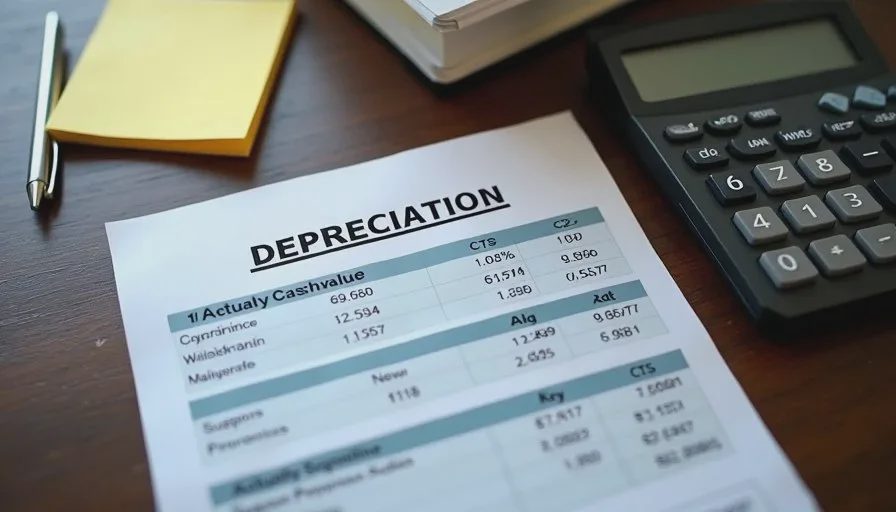
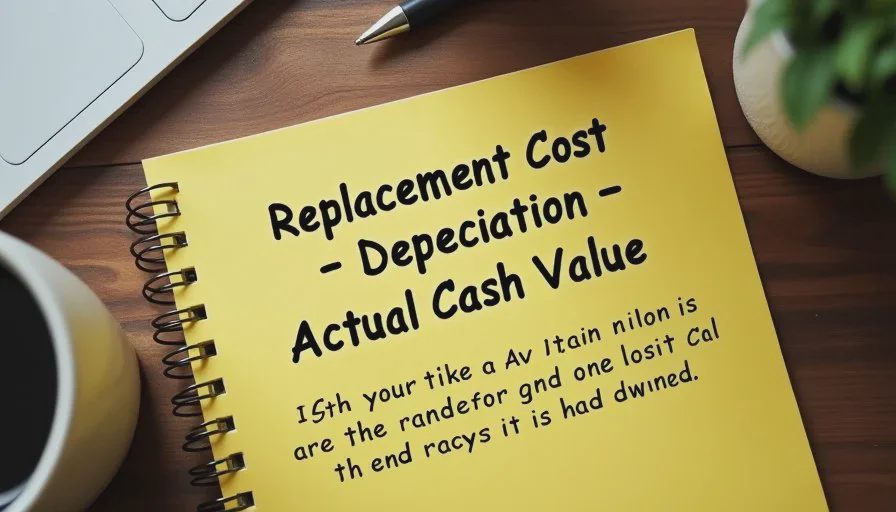
Most homeowners policies begin the settlement of a roof claim on an actual-cash-value basis. Actual cash value starts with the cost to repair or replace the damaged property with new materials of like kind and quality, then subtracts depreciation. Depreciation reflects the age, wear, and remaining useful life of the roof at the moment the loss occurred.
On a newer roof the depreciation percentage is modest. On a twenty-year-old roof the percentage can be substantial. The resulting payment may cover only a portion of the cost of a full replacement. This is the number that appears first on many estimates and the number that is often issued as the initial check.
Replacement Cost Coverage Does Not Erase Depreciation Immediately
Many policies also include replacement-cost provisions. Under those terms the insurer will ultimately pay the full cost of replacement, without deduction for depreciation, provided the homeowner actually completes the work and submits the required documentation. The sequence, however, still begins with actual cash value.
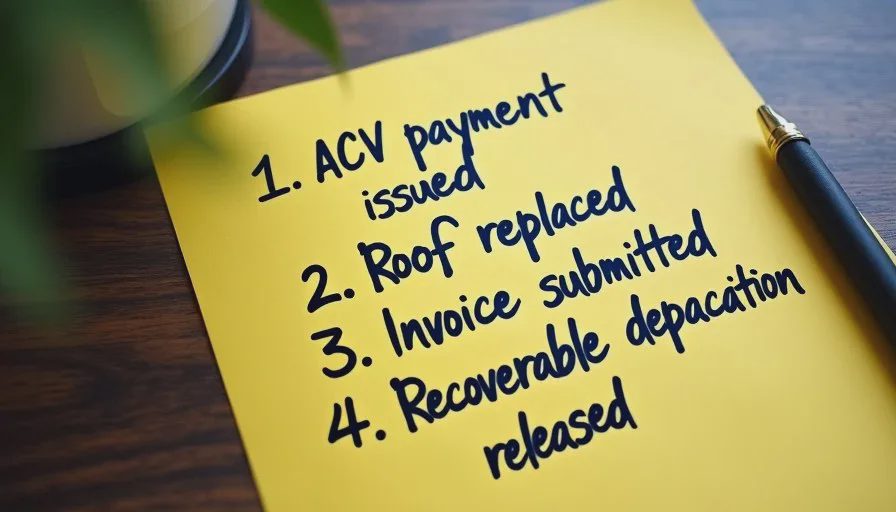
The practical effect is a two-step payment. The first payment reflects the depreciated value. The second payment, sometimes called recoverable depreciation, is released after the roof is replaced and the insurer receives proof of the completed work and the final invoices. Until that second payment arrives, the homeowner is responsible for bridging the gap.
Homeowners sometimes assume that “replacement cost” coverage means the full amount will be paid up front. The policy language usually requires the work to be performed first. Understanding that sequence prevents the expectation that a single check will equal the contractor’s full price.
How Depreciation Is Commonly Calculated
Insurers use different schedules, but the underlying idea is consistent. The adjuster or the estimating software assigns a percentage of depreciation based on the age of the roof and its observed condition. Some companies apply a relatively straight-line approach. Others weigh remaining useful life more flexibly. In either case, an older roof carries more depreciation than a newer one.
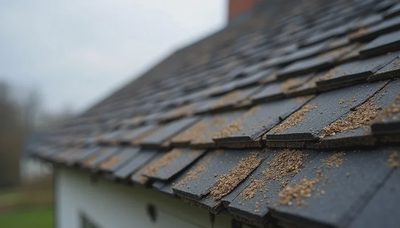
Condition also matters. A twenty-year-old roof that still retains good granule coverage and flexibility may receive a more favorable depreciation percentage than a fifteen-year-old roof that already shows advanced curling, widespread granule loss, and prior repairs. The physical evidence influences the number.
I reviewed many files in which two roofs of similar age received different depreciation treatments because their observed conditions differed. The calendar age set the baseline; the condition adjusted it.
Why the Gap Feels Larger on Older Homes
Newer roofs produce smaller gaps between replacement cost and actual cash value. Older roofs produce larger ones. That mathematical reality is what makes the depreciation line feel so significant to owners of older homes. A roof that is near the end of its expected service life has already delivered most of its value. The policy is designed to return the insured to the financial position held just before the loss—an older roof with remaining useful life—rather than to provide a new roof at no net cost.
Whether that design feels fair is a separate conversation from how the policy is written. For the homeowner evaluating a claim, the practical question is simply how large the depreciation percentage will be and whether recoverable depreciation is available once the work is done.
Recoverable Depreciation and the Conditions Attached to It
When a policy includes recoverable depreciation, the second payment is not automatic. The homeowner must usually complete the replacement, pay the contractor, and submit the final invoice along with any required forms. Some policies also impose time limits for completing the work. Missing those steps can mean the recoverable portion is never released.
It is worth confirming early in the claim whether recoverable depreciation applies and what documentation will be required. That information belongs in the same conversation as the initial estimate. Waiting until the work is finished to discover additional requirements creates avoidable friction.
Other Factors That Influence the Final Number
Depreciation is the largest and most consistent reducer of the initial payment, but it is not the only one. Deductibles are subtracted. Any limits specific to roofing or to certain types of damage may apply. If the insurer determines that only a portion of the roof sustained covered damage, the scope itself may be smaller than a full replacement. Each of these elements interacts with depreciation to produce the check the homeowner actually receives.
On older roofs the combination of a partial scope and significant depreciation can leave a substantial balance for the homeowner to cover. That outcome is more common than many people expect when they first file.
A Practical Way to Read the Estimate
When the insurance estimate arrives, locate three figures:
The replacement-cost total for the covered work
The depreciation amount that has been subtracted
The actual-cash-value payment that remains after depreciation and the deductible
Those three numbers describe the immediate financial picture. Then confirm whether recoverable depreciation is available and what steps are required to obtain it. The difference between the actual-cash-value payment and the contractor’s price is the amount the homeowner must be prepared to fund, at least temporarily.
Asking the adjuster to walk through the depreciation percentage and the basis for it turns an opaque reduction into a set of understandable inputs. The age of the roof, the observed condition, and the specific schedule the company uses are all legitimate topics for clarification.
Setting Expectations Before the Claim Is Filed
The most useful time to understand depreciation is before a loss occurs. Reviewing the declarations page and the policy language on valuation shows whether the roof is covered on an actual-cash-value or replacement-cost basis and whether any special roof limitations apply. That knowledge shapes the decision to file and the financial preparation that follows.
After a loss, documenting the roof’s pre-storm condition with photographs can also influence the depreciation discussion. A roof that can be shown to have been in relatively good condition for its age may receive a more favorable treatment than one whose advanced wear is obvious and undisputed.
Closing the Expectation Gap
Depreciation is not an arbitrary penalty. It is the policy mechanism that adjusts payment for the age and condition of the roof at the time of loss. On older homes the adjustment is larger, and the initial check is therefore farther from the full replacement price. Replacement-cost coverage can close much of that gap, but only after the work is completed and the required documentation is submitted.
Homeowners who understand the sequence—actual cash value first, recoverable depreciation later—enter the claim with more realistic numbers in mind. They are better prepared to bridge the temporary gap, to evaluate the contractor’s price against the insurance payment, and to complete the steps that release any recoverable portion.
The roof’s age does not determine whether a covered loss has occurred. It does determine how much of the replacement cost the insurer will pay in the first check. Reading that distinction clearly is one of the most practical steps an owner of an older home can take when a claim becomes necessary.