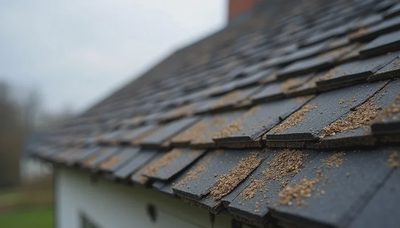

The strength of a roof insurance claim often depends less on the intensity of the storm and more on the quality of the information the homeowner can provide. On an older roof the distinction between recent storm damage and pre-existing wear is rarely obvious. Adjusters rely on physical evidence, patterns of damage, and any available history to make that separation. Homeowners who arrive with clear, dated documentation are in a better position to support their claim than those who rely on memory and a few hurried photographs taken after the fact.
I’m Heath Bannister. For more than a decade I reviewed residential property claims and contractor estimates. The files that moved most smoothly usually shared one trait: the homeowner had already gathered basic visual and written records before the adjuster arrived. The files that produced the most friction were often those in which the pre-loss condition of the roof was impossible to establish. This article lists the practical items worth collecting before a claim is opened, with particular attention to the realities of older roofs.
Start With Overall Exterior Photographs
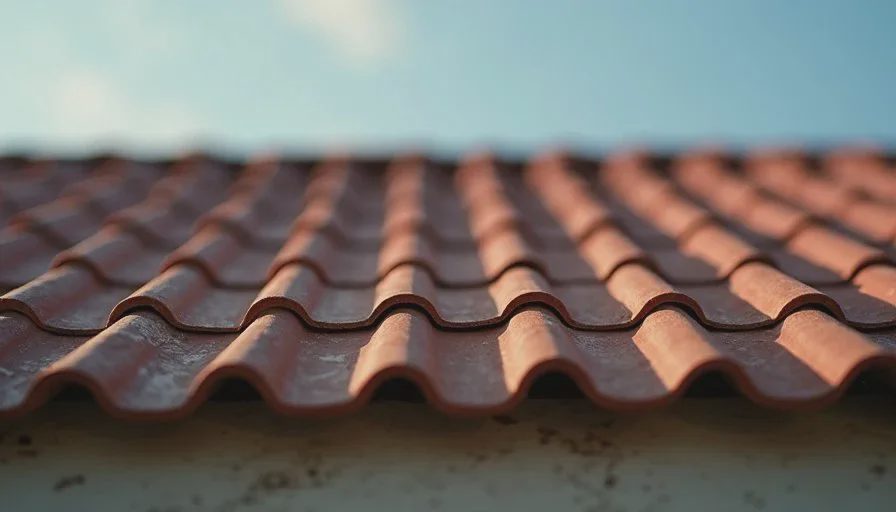
Begin with wide shots of every slope. Stand far enough back to capture the full plane of each section of the roof. Include the ridges, the eaves, and the transitions to walls or other roof planes. These images establish the overall appearance of the roof at a point in time. If a storm occurs later, new photographs taken from the same positions make comparison far more objective.
Take the photos on a clear day when the surface is dry. Overcast light is often better than harsh sun because it reduces glare and deep shadows. Date the images, either through the phone’s metadata or by keeping a simple log. On an older roof these baseline photographs are among the most useful pieces of evidence available.
Add Close-Ups of Representative Areas and Known Details
Wide shots alone are not enough. Move closer and photograph representative sections of the shingle field, paying attention to granule condition, any curling or cracking, and the state of the sealant strips if visible. Also capture the flashings at chimneys, sidewalls, and valleys, as well as every penetration—plumbing vents, exhaust terminations, and skylights if present.
If there are already known problem areas—previous leak locations, earlier repairs, or sections that have always looked more worn—document those specifically. The goal is not to create a catalog of defects. The goal is to record the condition that existed before any new weather event.
Record the Attic Condition
The underside of the roof often tells a clearer story than the exterior. On a dry day, enter the attic with a bright flashlight and photograph the underside of the decking along each slope, around penetrations, and near valleys if they are visible from below. Note any staining, darker wood, or signs of previous moisture. Also photograph the insulation condition and the ventilation openings at the eaves and ridge.
These images serve two purposes. They help establish whether moisture problems predated a storm, and they give the adjuster a view of the substrate that is otherwise difficult to assess from the ground. On older homes the attic record is frequently decisive in separating long-term wear from recent damage.
Keep a Simple Written Log
Photographs are powerful, but they are stronger when paired with brief written notes. A single page that records the approximate age of the current roof, the dates of any previous repairs or partial replacements, and the locations of any known past leaks provides context that images alone cannot supply. If prior insurance claims were filed on the roof, note the years and the general nature of the work.
This log does not need to be formal. A dated entry in a notebook or a simple digital document is sufficient. The important point is that the information exists and can be shared when the claim is opened.
Document the Storm Itself When It Occurs
Once a weather event happens, add a second set of records. Photograph the roof again from the same positions used for the baseline images. Take new close-ups of any areas that appear changed—bruising, missing tabs, lifted shingles, or debris. If it is safe to do so, note the approximate size of hail or the direction of strong winds. Local weather reports or nearby station data can be saved as supporting context, though the insurer will conduct its own verification.
Avoid permanent repairs until the adjuster has inspected, unless temporary measures are required to prevent further interior damage. Tarping a clearly damaged section is usually acceptable and should itself be photographed.
Organize Everything Before the Call
When the decision is made to file, gather the baseline photos, the post-storm photos, the attic images, and the written log into one place. A single digital folder or a printed set kept with the policy documents is enough. Presenting an organized package at the outset signals that the claim is being approached carefully and gives the adjuster less reason to question the timeline or the pre-loss condition.
I reviewed many claims in which the homeowner’s documentation was sparse and the adjuster’s conclusions about pre-existing wear were correspondingly broad. I also reviewed claims in which clear before-and-after images and a short history made the separation between old and new damage much easier to draw. The second group consistently produced clearer outcomes.
What Does Not Need to Be Perfect
Documentation does not have to be professional-grade. Phone photographs taken in good light are usually sufficient. The written log does not need legal language. The attic images do not require specialized equipment. Consistency and timing matter more than polish. Images dated before the storm are more useful than perfect images taken only afterward. A brief note about prior repairs is more useful than a long narrative written after the claim is already under discussion.
Special Considerations for Older Roofs
Older roofs carry more history. They are more likely to show mixed conditions—areas of advanced weathering alongside sections that are still performing, previous repairs that were never fully integrated, and attic staining that has accumulated over years. Because of that complexity, baseline documentation is even more valuable than it is on a newer roof. Without it, almost any observed wear can be attributed to age rather than to the recent event.
At the same time, documentation cannot create coverage where the policy does not provide it. If the damage is limited or if the roof’s overall condition is already advanced, the claim outcome may still be modest. Clear records simply ensure that the decision rests on the best available evidence rather than on incomplete assumptions.
A Practical Pre-Claim Checklist
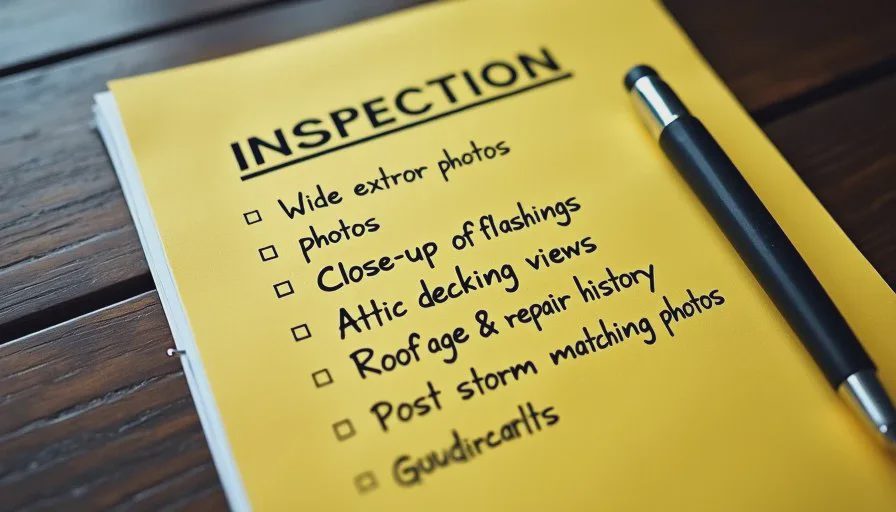
A concise list of what to gather looks like this:
Wide photographs of every roof slope, taken on a clear day
Close-ups of the shingle field, flashings, valleys, and penetrations
Attic photographs of the underside of the decking and ventilation openings
A short written note on roof age, prior repairs, and known leak history
After a storm: matching photographs from the same positions plus images of new damage
Copies of any prior claim documents or repair invoices if available
Completing this list takes only a few hours spread across one or two days. The resulting package remains useful for as long as the roof is on the house.
Closing the Information Gap
Insurance claims on older roofs are often decided at the boundary between storm damage and ordinary aging. That boundary is easier to locate when both sides of it have been recorded. Homeowners who document the roof’s condition before trouble arrives give themselves the clearest possible starting point. Those who wait until after the storm must rely on whatever evidence still exists and on the adjuster’s interpretation of an undocumented baseline.
The work of documentation is straightforward. Wide shots, close-ups, attic views, and a short written history form a practical record. When a claim becomes necessary, that record turns a difficult conversation into a more grounded one. On an older roof, that difference is often the margin between a claim that feels opaque and one that at least rests on shared facts.