Homeowners with older roofs often ask the same question after a storm or a contractor visit: will insurance pay for the replacement? The short answer is that it sometimes will, but rarely for the reasons people expect. Age alone does not trigger coverage. A contractor’s opinion that the roof is “at the end of its life” does not trigger coverage either. What matters is whether the policy sees recent storm damage that exceeds normal wear, how depreciation is applied, and how clearly the damage is documented.
I’m Heath Bannister. I spent more than a decade as a property claims adjuster and estimate reviewer. A large share of the files I handled involved asphalt roofs on houses built in the 1960s, 1970s, and early 1980s. The outcomes varied widely. Some claims resulted in meaningful payment toward a full replacement. Others produced only partial payments or denials. The difference almost never came down to the calendar age of the shingles. It came down to the distinction between storm-created damage and ordinary aging, the policy’s valuation method, and the quality of the evidence.
This article explains how those factors work in practice so homeowners can approach the conversation with clearer expectations.
Coverage Starts With the Cause, Not the Age
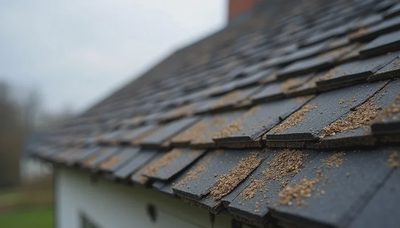
Most homeowners policies are designed to respond to sudden and accidental direct physical loss. Wind, hail, and certain other weather events fall into that category when they create damage. Gradual wear, weathering, and deterioration generally do not. On an older roof the two often exist side by side. Granule loss from years of sun exposure can sit next to bruising from a recent hail event. Lifted tabs from long-term expansion and contraction can sit next to tabs that were creased by high wind.
The adjuster’s job is to separate the recent storm-related damage from the pre-existing condition. When the storm-related portion is limited, the payment is often limited as well. When the storm has created widespread damage that makes repair impractical, the claim is more likely to support a full replacement, subject to the policy’s other terms.
I reviewed many files in which the homeowner believed the entire roof should be covered because it was old and a storm had occurred. The policy language rarely supported that view. The storm had to be shown as the cause of damage that needed repair or replacement. Age explained why the roof may have been more vulnerable; it did not itself create coverage.
Actual Cash Value Versus Replacement Cost
Two valuation methods appear frequently in roof claims: actual cash value (ACV) and replacement cost value (RCV). The difference is significant on an older roof.
Actual cash value starts with the cost to replace the damaged property and then subtracts depreciation. Depreciation reflects the age and condition of the roof at the time of loss. On a roof that is twenty or twenty-five years old, the depreciation percentage can be substantial. The resulting payment may cover only a fraction of the cost of a new roof.
Replacement cost value pays the full cost to replace the damaged roof with new materials of like kind and quality, without deduction for depreciation, provided the homeowner actually completes the work and meets the policy’s other conditions. Many policies pay ACV first and release the recoverable depreciation only after the work is finished and proper documentation is submitted.
Homeowners sometimes assume that “replacement cost” coverage means the insurer will simply write a check for a new roof. The sequence is usually more structured. The initial payment reflects ACV. The additional amount, if any, follows completion. Understanding which method applies to the policy is one of the most useful steps a homeowner can take before filing.
Depreciation Is Not a Penalty; It Is a Policy Feature
Depreciation schedules vary by insurer and by the specific materials involved. Some companies apply a straight percentage based on age. Others consider the remaining useful life more flexibly. In either case, an older roof will usually carry more depreciation than a newer one.
This is the point at which many homeowners feel the outcome is unfair. The roof was functioning until the storm. Why should its age reduce the payment? From the policy’s perspective, the insured is being returned to the same financial position held before the loss—an older roof with remaining useful life—rather than being given a brand-new roof at no net cost. Whether that design feels fair is a separate question from how the policy is written.
When I reviewed estimates I often saw large gaps between the contractor’s full replacement price and the insurer’s ACV calculation. The gap was usually depreciation. Homeowners who understood that mechanism in advance were better prepared for the number that appeared on the estimate.
Documentation Changes the Conversation
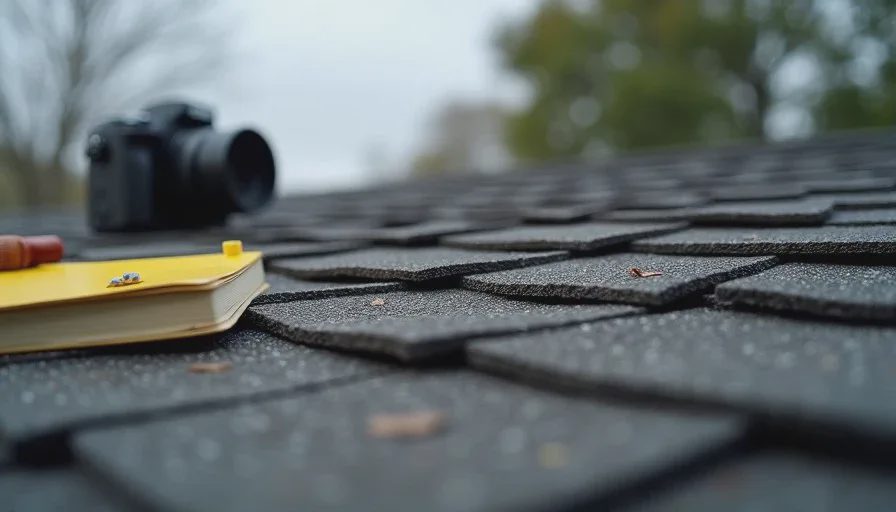
Claims that produced clearer outcomes usually shared one trait: good documentation created before the adjuster arrived. Photographs of the roof from multiple angles, close-ups of damaged areas, attic views showing any interior staining, and a simple log of when leaks appeared all helped establish the condition at the time of loss.
On older roofs the pre-loss condition matters. If the insurer can see that widespread granule loss, curling, and prior repairs already existed, the portion attributed to the recent storm may shrink. If the photographs show relatively intact surfaces with clear, localized storm damage, the storm-related portion is easier to isolate.
I recommend homeowners photograph the roof and attic on a clear day long before any claim is considered. Those images become a baseline. After a storm, new photographs taken from the same angles make the comparison more objective. Written notes about previous leaks and repairs add further context.
Common Points of Disagreement
Several issues appear repeatedly in older-roof claims:
Whether observed damage is from the recent storm or from long-term wear
How much of the roof is affected and whether repair is practical
The percentage of depreciation applied
Whether matching of undamaged slopes is required under the policy or state rules
The treatment of code upgrades that may be required when a new roof is installed
None of these disagreements is automatically resolved in the homeowner’s favor. Each depends on the specific policy language, the evidence, and the applicable state regulations. Homeowners who treat the claim as a process of documentation and clarification rather than as a simple yes-or-no request tend to navigate the process with fewer surprises.
What Insurance Is Unlikely to Do
Insurance is unlikely to pay for a full replacement solely because the roof is old. It is unlikely to treat ordinary weathering as a covered loss. It is unlikely to ignore depreciation on an ACV policy. It is also unlikely to accept a contractor’s replacement recommendation as the sole basis for payment without supporting evidence of covered damage.
These limitations are not unique to any single company. They reflect how most homeowners policies are structured. Understanding them early prevents the frustration that comes from expecting a different outcome.

A Practical Sequence Before Filing
Before a claim is opened, a homeowner can take several useful steps. Review the declarations page and the policy language on valuation and roof coverage. Confirm whether the policy pays ACV or RCV and whether any special roof schedule or limitation applies. Gather existing photographs and notes about the roof’s condition. After a storm, document new damage promptly and avoid permanent repairs until the adjuster has inspected, unless temporary measures are required to prevent further damage.
When the adjuster visits, present the documentation calmly and ask how depreciation will be calculated and whether recoverable depreciation is available. Request a written explanation of any amounts that are denied or limited. Those steps do not guarantee a particular payment. They do increase the chance that the final decision rests on clear information rather than on incomplete assumptions.
Closing the Expectation Gap
Older roofs can receive insurance payment when a covered storm creates damage that meets the policy’s terms. The payment is often reduced by depreciation and limited to the storm-related portion of the condition. Age itself is not the trigger; it is a factor that influences depreciation and the separation of wear from damage.
The homeowners who moved through the process with the least frustration were usually the ones who understood those mechanics before the first conversation with an adjuster. They documented conditions carefully, asked precise questions about ACV and recoverable depreciation, and treated the claim as a structured evaluation rather than as a simple request for a new roof.
That approach does not change the policy language. It does give the homeowner a clearer basis for deciding whether to file, what to expect if they do, and how to evaluate the number that eventually appears.