Roof replacement quotes on older homes often look straightforward until the work begins. Then the number moves. Homeowners who expected a fixed price find themselves looking at change orders for decking, flashing, or ventilation that were not fully visible from the ground. The pattern is common enough that it deserves a clear explanation before any contract is signed.
I’m Heath Bannister. For more than a decade I reviewed residential property claims and contractor estimates, many of them on houses built between the 1950s and the early 1980s. The files that produced the largest gaps between the original quote and the final cost almost always involved the same set of conditions: decking that looked sound until the shingles came off, flashings that had been patched rather than replaced, and attic ventilation that no longer matched current expectations. Understanding those drivers helps homeowners read a proposal more accurately and ask better questions while the numbers are still on paper.
This article walks through the cost factors that most often expand on older houses. None of them is inevitable. All of them become more manageable when they are named early.
The Starting Number Is Rarely the Final Number
Most initial quotes are built on what can be seen from the exterior and, if access allows, from the attic. The estimator counts squares of shingles, notes the roof pitch, observes the condition of the visible flashings, and makes assumptions about the decking. On a newer house those assumptions often hold. On an older house they hold less often.
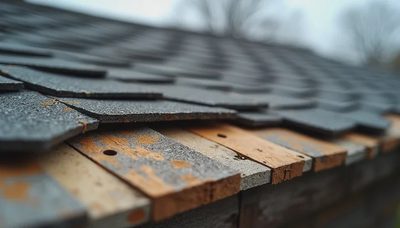
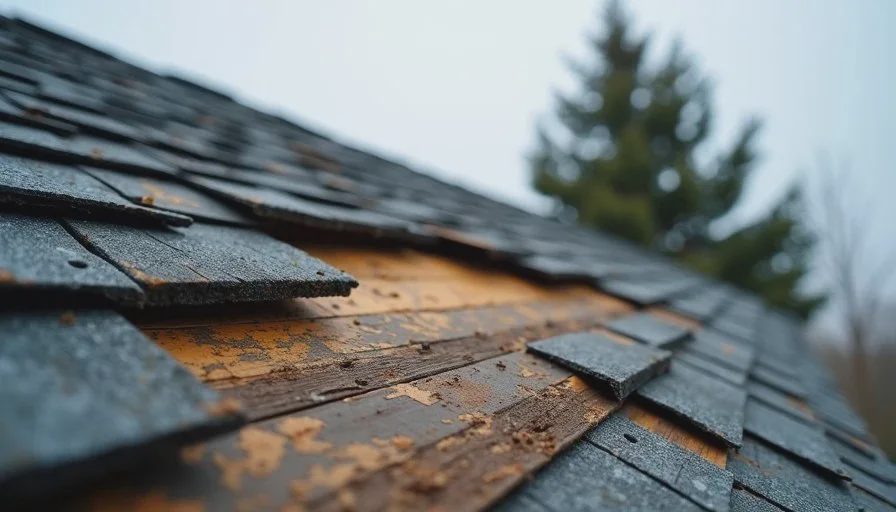
The gap appears after tear-off. Once the old covering is removed, the actual condition of the wood decking becomes visible. Soft spots that felt minor underfoot may extend farther than expected. Previous layers of shingles or underlayment may have trapped moisture against the boards. Nail holes from earlier roofs may have compromised the holding power of the wood. Each of those discoveries can add material and labor that were not fully priced in the original number.
The same sequence occurs with flashings. Metal that looked serviceable from the ladder may show corrosion on the hidden face or may no longer sit tight against the wall once the surrounding shingles are gone. Valleys that appeared intact may reveal thinned metal or prior sealant repairs that no longer hold. Replacing those details correctly adds cost.
Decking Is Usually the Largest Variable
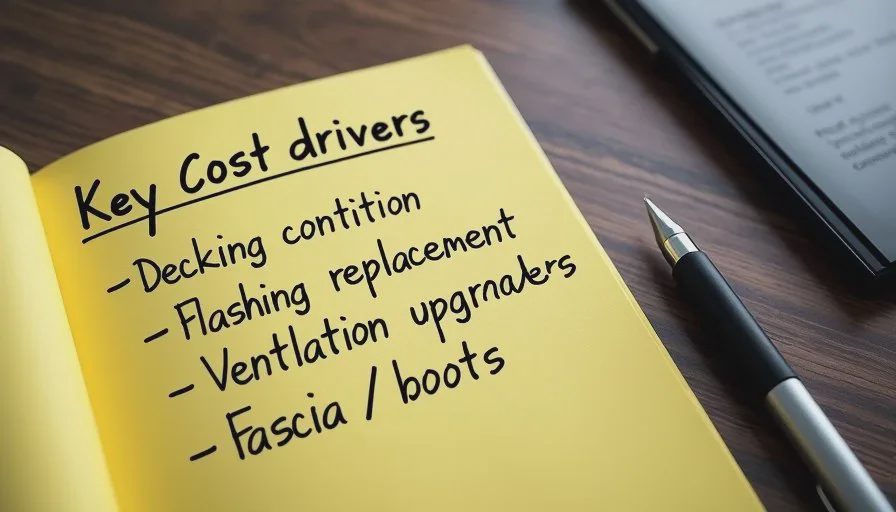
On older homes, decking condition is the single factor that most frequently moves the final price. Some proposals include a modest allowance for replacement boards. Others state a per-sheet price and leave the quantity open. Still others remain silent until the tear-off is underway.
When the allowance is too low or the decision criteria are unclear, the homeowner faces a choice under time pressure: approve additional work or accept a roof installed over questionable substrate. Neither option feels good. The cleaner approach is to ask every contractor, before signing, how they will determine which boards need replacement and how that work will be priced. A written per-sheet cost paired with a clear inspection standard is more useful than a low allowance that is likely to be exceeded.
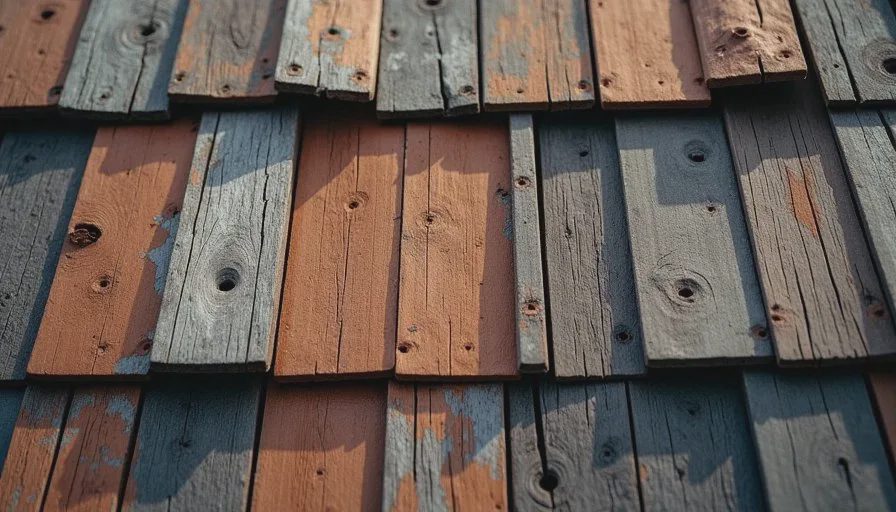
The age and original construction of the house influence the risk. Houses built with thinner sheathing or with boards rather than plywood panels can show more variation once the covering is removed. Previous roofing cycles that left thousands of nail holes also reduce the remaining strength of the wood. These conditions are not always obvious from the attic, especially if insulation covers the underside of the deck.
Flashing Details Add Up Quietly
Flashings are another frequent source of added cost. Step flashing along sidewalls, counter flashing at chimneys, and valley metal all perform critical work. On older homes these components are often original or were only partially updated during earlier repairs. Sealant is commonly used to extend their life. Once the shingles come off, the limitations of that approach become visible.
A proposal that assumes existing flashings can be reused may later require change orders when the metal proves too corroded or too poorly integrated to remain. Full replacement of step flashing and chimney details is more expensive in the moment and usually more reliable over the life of the new roof. The difference should be visible in the written scope. If the proposal is silent on whether flashings will be replaced or reused, that silence is itself information.
Valleys deserve separate attention. Water volume is higher there, and older valley details—whether metal or woven shingles—often show wear earlier than the open field. Replacing a valley correctly can involve additional underlayment, ice-and-water shield, and careful metal work. Those line items should appear in the original proposal rather than as later additions.
Ventilation Upgrades Are Easy to Underestimate
Many older homes were built with limited attic ventilation. Soffit vents may be undersized or blocked. Ridge vents may have been added later without adequate intake. Static vents may be spaced too far apart. When a new roof is installed, simply matching the previous ventilation arrangement can leave the attic with the same airflow limitations that contributed to the aging of the old shingles.
Improving ventilation often requires additional cuts in the ridge, new intake at the eaves, or the addition of baffles to keep insulation from blocking airflow. These changes improve the long-term performance of the new roof. They also add labor and material that may not have been fully priced in a basic replacement quote. Asking how the proposal handles ventilation—and whether any upgrades are included—prevents that cost from appearing only after the crew is on site.
Other Conditions That Surface After Tear-Off
A few additional items appear with enough frequency to deserve mention. Fascia boards that have absorbed moisture along the edges may need repair or replacement once the drip edge is removed. Chimney crowns or cricket details may show deterioration that affects the new flashing. Plumbing boots that were covered by the old shingles may be brittle and require replacement. Each of these is a relatively small line item on its own. Together they can move the final number by a noticeable amount.
None of these discoveries is evidence of poor estimating. They are the result of working on a structure that has already lived through several decades of weather, previous repairs, and original construction practices that differ from current standards. The practical response is to treat the original quote as a starting point that still requires confirmation of the major variables.
How to Read a Quote With These Factors in Mind
When the proposals arrive, look first at how each one treats the known variables. Does the scope state a decking allowance or a per-sheet price? Does it specify whether flashings will be replaced? Does it address valleys as a distinct detail? Does it describe the ventilation plan? The proposals that answer these questions in writing give a more reliable basis for comparison than those that leave the issues open.
Ask every contractor the same set of clarifying questions and write the answers beside each quote. Useful questions include:
What is the per-sheet price for decking replacement, and what standard do you use to decide which boards need to be changed?
Will all step flashing and chimney counter flashing be replaced, or will some existing metal be reused?
How are valleys detailed in this proposal?
What ventilation improvements, if any, are included?
How will change orders be priced and approved if additional issues appear during tear-off?
The answers turn an opaque total into a set of comparable components. A higher initial number that already includes realistic allowances may produce a lower final cost than a lower initial number that leaves every variable open.
Keeping the Final Number Closer to the Starting Number
Complete elimination of change orders is rarely possible on an older house. Reduction of surprise is possible. The steps that help most are straightforward: document the current condition with photographs and attic notes before any contractor arrives, insist on written clarity about decking, flashing, and ventilation in every proposal, and treat the original quote as a starting framework rather than a guaranteed final price.
Older homes reward that level of attention. The roof that looks similar to a newer roof from the street often carries a different set of internal conditions. Naming those conditions early keeps the cost conversation grounded in the actual house rather than in a generic square-foot average.
The goal is not to avoid spending money. The goal is to spend it on the work the roof actually needs, with as little surprise as the structure will allow. Reading the cost drivers clearly is the first step in that direction.