
I’ve spent more than a decade looking at aging roofs, storm claims, contractor scopes, and insurance paperwork that left homeowners confused. I’m Heath Bannister, a former property claims adjuster and estimate reviewer based in Knoxville, Tennessee. After years of reviewing the same patterns on older houses, I started Old Roof Signals for one clear reason: older homes need better roof decisions, not faster sales pitches.
Too many conversations about roof replacement begin with urgency instead of evidence. A contractor arrives, points at a few worn shingles or a stain in the attic, and the next sentence is already about scheduling a full tear-off. That approach works better for the person selling the job than for the homeowner who has to live with the result—and the bill—for the next twenty years. Older homes hide problems differently. They also reward careful reading of the roof more than they reward speed.
Why Older Homes Are a Different Category
A roof on a house built in the 1960s, 1970s, or even early 1980s is not the same as a roof on a house finished five years ago. The decking may have been installed differently. Ventilation may have been an afterthought. Flashing details around chimneys, valleys, and sidewalls often reflect older practices that no longer match current expectations. When water eventually finds a path, the path is rarely simple.
In my claims work I saw the same sequence repeatedly. A homeowner noticed a few missing granules or a small leak after a storm. The first contractor offered a full replacement quote within an hour. A second contractor recommended a more limited repair. A third said the decking would need widespread replacement once the old shingles came off. The homeowner was left holding three numbers and almost no shared language to compare them. That gap is exactly what this site exists to shrink.
Older homes also carry more history in the attic and the roof plane. Previous repairs, partial overlays, and uneven ventilation create patterns that a quick drive-by inspection can miss. Reading those patterns takes time. It also takes a willingness to say “I’m not sure yet” when the evidence is incomplete. Sales scripts rarely leave room for that sentence.
What I Saw Reviewing Estimates and Claims
For eleven years I reviewed residential exterior losses and contractor scopes. The files that stayed with me were rarely the dramatic total losses. They were the everyday older-home jobs where the numbers jumped for reasons the homeowner never saw coming. Soft decking under a few sections of shingles. Flashing that had been patched rather than replaced. Ridge vents that looked fine from the ground but had never been properly integrated with the original roof structure. Each of those items could move a quote by thousands of dollars once the tear-off began.
I also saw how insurance language collided with age. Storm damage and ordinary wear often sit side by side on the same roof. Adjusters and contractors sometimes used different definitions of what counted as covered damage. Homeowners were left trying to interpret depreciation schedules, actual cash value versus replacement cost, and exclusion language that had never been explained in plain English. The paperwork was accurate according to the policy. It was still confusing to the person who had to write the check for the gap.
Those experiences shaped the way I write here. I am less interested in telling you that every older roof needs immediate replacement. I am more interested in helping you decide whether the roof in front of you is worn out or simply looks tired, whether a quote is complete or merely clean-looking, and whether insurance is likely to participate in a way that matches your expectations.
What This Site Will and Will Not Do
Old Roof Signals is built around five decision areas:
Recognizing the visible and hidden signals that an older roof may be reaching the end of its useful life.
Filtering contractors so you can compare scopes, insurance, licensing, and workmanship language instead of just the bottom-line number.
Understanding the cost drivers that commonly expand on older houses—decking, underlayment, flashing, ventilation, and the surprises that appear after tear-off.
Interpreting insurance coverage, depreciation, and the difference between storm damage and age-related wear.
Checking the finished work once the crew leaves so small problems do not become long-term ones.
I will explain these topics in plain homeowner language. I will treat older houses as a distinct category rather than as slightly older versions of new construction. I will keep the focus on the roof decision itself rather than drifting into general remodeling inspiration.
I will not use panic language to create urgency. I will not present a single contractor’s approach as the only correct one. I will not claim that every older roof must be replaced on a fixed schedule. Roofs fail at different rates depending on materials, installation quality, climate, ventilation, and maintenance history. A useful decision starts with the specific roof in front of you, not with a calendar.
How to Use the Content Here
Start with the signals. Walk the property when the light is good. Look at the shingle edges, the flashings, the valleys, and any penetrations. Go into the attic with a flashlight and note what you see on the underside of the decking and around the rafters. Write down the age of the current roof if you know it, along with any previous repairs. Those notes become the baseline against which every contractor conversation can be measured.
When quotes arrive, place them side by side. Look for the same scope items: underlayment type, ice-and-water shield locations, flashing replacement, ridge ventilation, and decking replacement criteria. A lower number is not automatically better if major line items are missing. A higher number is not automatically more thorough if the extra cost is unexplained. The goal is a complete, comparable set of numbers, not the single lowest bid.
Insurance questions deserve the same deliberate approach. Document the condition of the roof with dated photographs before any claim is filed. Understand whether your policy responds on an actual-cash-value or replacement-cost basis. Ask how age and depreciation will be applied. Those steps will not guarantee a particular outcome, but they reduce the chance of surprise once the adjuster’s report arrives.
A Practical Example From the Files
One file that still sits with me involved a 1970s ranch with original decking and a roof that had been partially repaired after a hail event eight years earlier. Three contractors looked at the same property. The first recommended full replacement and quoted a number that assumed widespread decking replacement. The second recommended a more limited section replacement and did not address the older repaired areas. The third walked the attic, noted uneven ventilation and soft spots in two valleys, and wrote a scope that included targeted decking work plus full flashing replacement. The homeowner ultimately chose the third approach after asking each contractor to explain the difference in scope. The final cost landed between the first two quotes, and the work matched the actual condition more closely than either of the quicker proposals.
That outcome was not the result of finding the cheapest contractor. It was the result of slowing down long enough to compare what each quote actually covered. Older homes reward that kind of patience.

The Phrase That Guides the Work
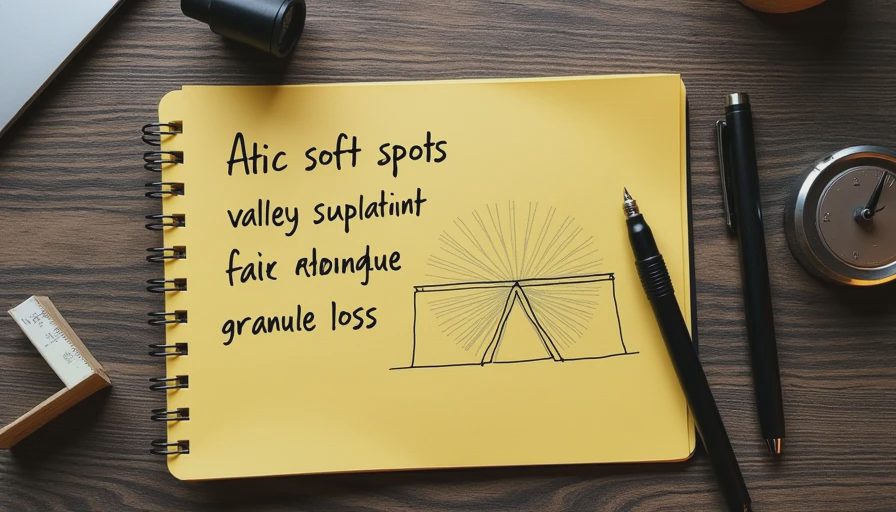
I keep a simple line on the yellow legal pad I still use when I review a scope: “Don’t buy the pitch. Read the roof.” The pitch is easy to deliver and easy to believe when the numbers feel urgent. The roof is the only source of reliable information. It will tell you, through wear patterns, attic clues, flashing condition, and leak history, whether it is still performing or whether replacement is the more rational next step.
If you own an older house and you are trying to decide what the roof needs, this site is written for you. The articles that follow will walk through specific signals, contractor questions, cost line items, insurance language, and post-install checks. Each one is meant to give you a clearer basis for the decisions that only you can make.
Take the time. Look carefully. Compare thoroughly. The roof will still be there tomorrow, and the decision will be better for the extra day of reading.