Three of the most common things homeowners notice on an aging roof are curling shingle tabs, soft spots underfoot, and bare areas where the granules have worn away. Each of these can appear years before a roof fails. Each of them can also be part of a larger pattern that means continued repair is no longer the most practical path. The difference lies in how widespread the conditions are, how they combine with one another, and what the attic shows underneath.
I’m Heath Bannister. For more than a decade I reviewed residential claims and contractor estimates on older homes. The same three surface signals appeared in file after file. When they remained limited and the decking below stayed dry and solid, the roof often had remaining service life. When they appeared together across large sections and the attic showed corresponding moisture history or softened wood, full replacement became the clearer long-term choice. This article walks through how to read those signals without jumping to the most expensive conclusion—or ignoring a pattern that has already gone too far.
Granule Loss: Normal Aging Versus Functional Decline
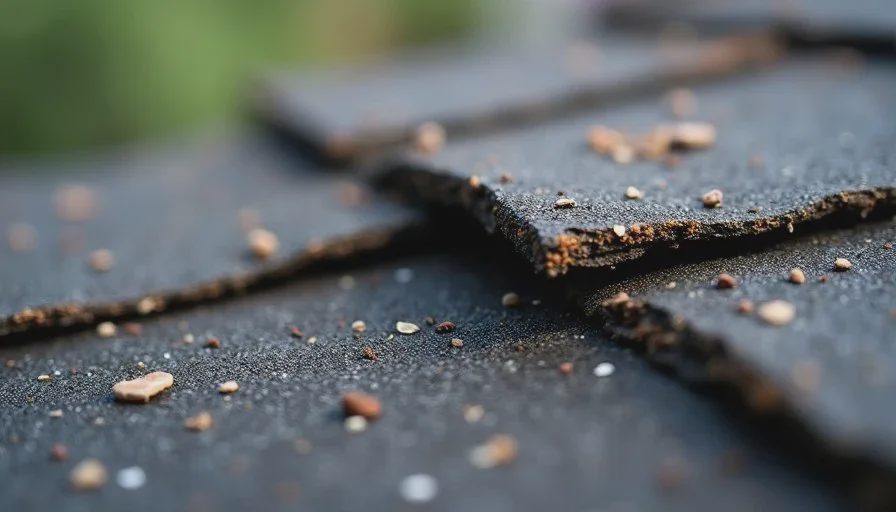
Asphalt shingles rely on the surface granules to shield the asphalt from ultraviolet light. Some loss is expected. Light, even thinning across the field is a normal part of aging and does not by itself mean the roof must be replaced. The signal becomes stronger when the loss is heavy and widespread, when large patches of black asphalt are visible, and when granules are accumulating in the gutters or at the downspouts in noticeable quantities.
I paid attention to the pattern more than to the presence of loss. Uniform thinning on the southern and western slopes is common on roofs that are simply getting older. Irregular, advanced loss that leaves the mat exposed across broad areas suggests the surface is breaking down faster than the calendar age alone would predict. Even then, granule loss rarely stands alone as a reason for replacement. It becomes more decisive when it appears alongside curling tabs or soft decking.
Curling and Cupping: Flexibility Matters
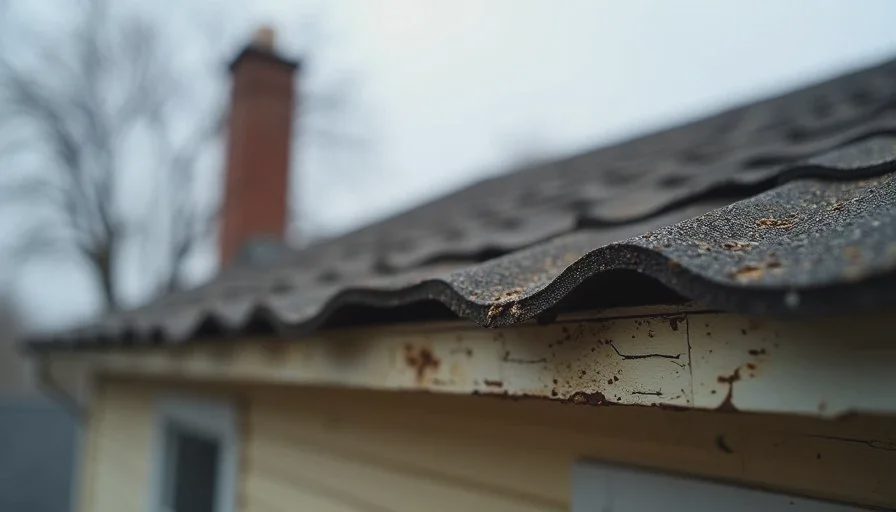
Shingles are designed to lie flat. As they age they can lose plasticizers and begin to curl at the edges or cup in the center. Mild curling along the lower edge of the tabs can appear while the roof is still shedding water effectively. The condition becomes more significant when the tabs lift enough to catch wind, when corners break off under light pressure, or when the curling is accompanied by cracking.
Widespread curling across multiple slopes is a clearer indication that the material has reached an advanced stage of weathering. At that point the shingles are less able to stay sealed and more likely to allow wind-driven rain to work underneath. Isolated curling on a single exposure can sometimes be monitored. Curling that has become the dominant appearance of the field usually means the covering is nearing the end of reliable performance.
Soft Spots: The Signal Beneath the Surface
Soft or springy areas underfoot are different in kind from surface wear. They indicate that the decking itself has been weakened, almost always by long-term moisture. This is the signal I treated with the most urgency. Surface shingles can look tired while the wood below remains solid. When the wood has softened, the problem has moved past the covering and into the structure that holds it.
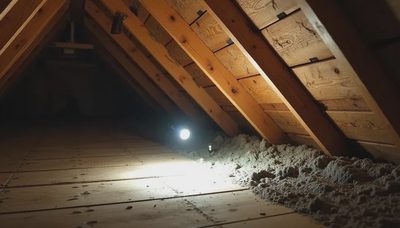
Soft spots are best confirmed from both sides. From above, the give underfoot is noticeable on a dry day. From the attic, the same areas often show staining, darker wood, or previous moisture trails. Decking that has lost strength will not hold new fasteners as reliably and may continue to flex after a new covering is installed. Ignoring soft spots and simply covering them over frequently leads to larger problems later.
On older homes the decking is often original board sheathing or early plywood. Once that material has cycled through repeated wetting and drying, its remaining capacity is limited. Soft spots in more than one location, or soft spots that line up with long-term attic staining, are among the stronger indicators that replacement of the covering should include serious attention to the substrate.
How the Three Signals Interact
Any one of these conditions can exist on a roof that still has useful life. The case for replacement strengthens when they appear together. Heavy granule loss plus widespread curling plus soft decking in multiple areas forms a different picture from light granule loss alone. The combination suggests that the roof system—not just isolated shingles—has reached the limit of reliable performance.
I also weighed the attic evidence. Exterior wear that looked advanced but sat over dry, solid decking and clean insulation could sometimes be monitored or addressed with targeted repairs. Exterior wear that matched widespread attic staining and softened wood rarely improved with further patching. The underside of the roof often decided the question the exterior alone could not.
What Still Allows Time
Not every older roof that shows these signs needs immediate replacement. A roof with moderate, even granule loss, limited curling on the most exposed slope, and a dry attic with solid decking can often continue to perform for additional years. In those cases the practical steps are documentation, seasonal monitoring, and attention to flashings and valleys where leaks are more likely to begin.
The goal is not to replace at the first sign of aging. The goal is to recognize when the signs have moved from cosmetic to functional and when continued repair is simply deferring a larger and more expensive intervention.
A Practical Reading Sequence
A useful evaluation follows a consistent order:
Walk the exterior and note the extent of granule loss and curling across each slope.
Check the edges, valleys, and flashings for related wear or repeated sealant.
From a safe position, test for soft spots on a dry day.
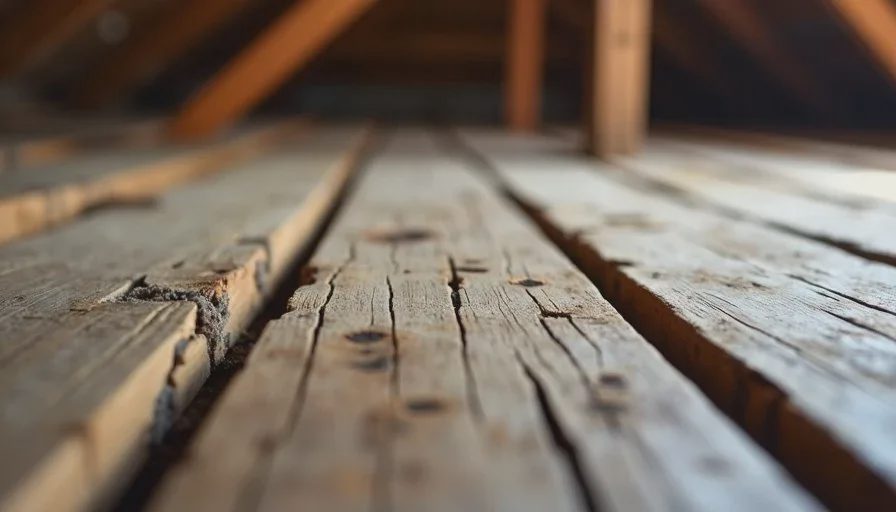
Enter the attic with a bright flashlight and examine the underside of the decking for staining, darker wood, and any soft areas visible from below.
Compare the exterior pattern with the attic condition.
When the exterior shows advanced granule loss and curling and the attic shows corresponding moisture history or softened decking, the system as a whole is usually signaling that replacement is the more rational next step. When the exterior looks tired but the attic remains dry and solid, more time and targeted maintenance may still be reasonable.
Why Older Homes Require This Level of Reading
Newer roofs tend to fail in more uniform ways. Older roofs carry the cumulative effects of previous coverings, original ventilation limitations, and decades of weather. Granule loss, curling, and soft spots therefore appear in more varied combinations. Reading them as a set, rather than as isolated defects, produces a more accurate decision.
Contractors may recommend replacement as soon as any of these signs appear. That recommendation is sometimes correct and sometimes premature. The homeowner who has already walked the roof, checked the attic, and noted how the signals combine is in a better position to evaluate the advice.
Closing the Interpretation
Curling shingles, soft spots, and granule loss are among the most visible signs of an aging roof. On their own, each can be part of ordinary weathering. Together, and especially when matched by attic evidence of long-term moisture or weakened decking, they usually mean the covering has reached the point where replacement is the clearer long-term choice.
The work of reading the signals carefully still belongs to the homeowner. Take the time to look at the field, test the surface, and examine the underside. The roof will still be there after the inspection, and the picture that emerges will be more reliable than any single symptom viewed in isolation.