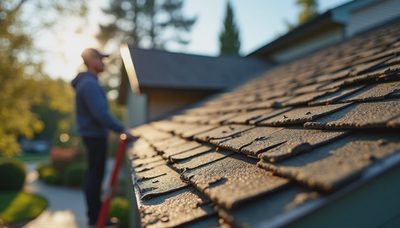
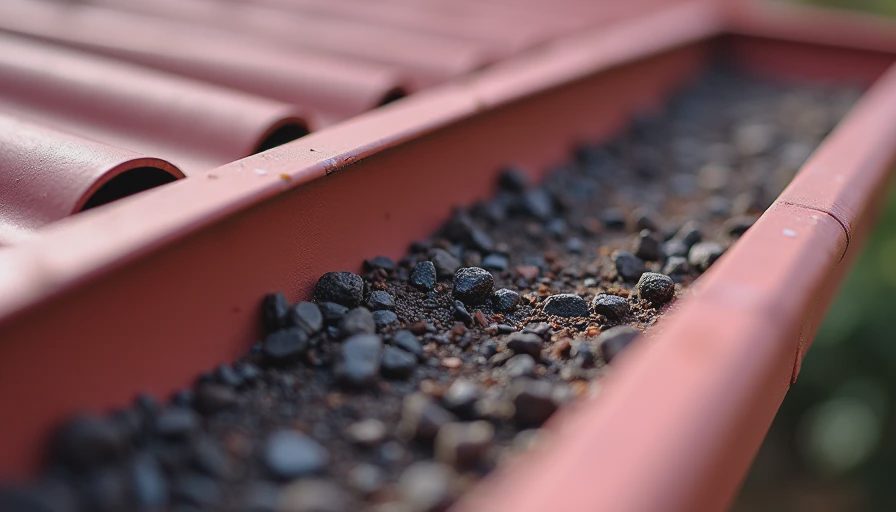
Granule loss in gutters is one of the more useful clues an older-home owner can find after cleaning out a downspout or checking the first flush of rainwater. Those small, sand-like particles come from the surface of asphalt shingles. A handful does not automatically mean the roof has failed, but repeated accumulation deserves a closer look. The key question is whether the granules are coming from normal aging, a recent storm, installation damage, or shingles that are actively breaking down.
What the granules are telling you
Asphalt shingles use ceramic-coated granules to protect the asphalt layer from ultraviolet light and weather. They also add weight and help provide the texture that sheds water. Some loose material is normal when shingles are new. Manufacturers commonly leave a small amount of excess granules on the surface after production, and a new roof can wash a modest quantity into the gutters during its first rainstorms.
The pattern changes as a roof gets older. Granule loss in gutters on a roof that is 15, 20, or 25 years old often points to surface wear. Shingles may look faded, rough, or uneven when viewed from the ground. You might also see bald-looking patches where the dark asphalt beneath is exposed. Once the protective coating is thinning, the shingles can become more brittle and less reliable during wind, heat, and freeze-thaw cycles.
Age is only one possibility. A severe hailstorm can knock granules loose while leaving damage difficult to see from the driveway. Foot traffic from a satellite installation, chimney work, or a careless inspection can scuff the shingle surface. Poor attic ventilation can also contribute to accelerated aging by keeping the roof deck and shingles hotter than intended. Older homes hide problems differently, especially when several roof layers or past repairs are involved.
How to inspect before calling it roof failure
Start with the gutters, but do not stop there. Photograph the material before removing it, including a close-up beside a coin for scale. Note whether it appears as a light dusting, a gritty layer, or several tablespoons of coarse pieces. Check multiple gutter sections rather than relying on one low point, because water and debris collect unevenly.
Next, inspect the roof from the ground with binoculars. Look for missing granules, exposed black areas, curled shingle edges, cracked tabs, and inconsistent color. Pay special attention to valleys, eaves, roof edges, and slopes facing strong afternoon sun. If only one slope looks worn, a localized event or drainage pattern could be involved. If every slope looks faded and rough, general aging becomes more likely.
Do not climb onto a steep or wet roof just to collect evidence. A qualified roofer can walk the surface safely and document soft spots, loose flashing, lifted shingles, and damage around vents. Ask for dated photographs rather than accepting a verbal statement such as “the roof is shot.” A clean quote is not always a complete quote, and a dramatic diagnosis without pictures is not enough for an expensive replacement decision.
When granule loss suggests repair or replacement
A small amount of granule loss with otherwise sound shingles may call for monitoring or a targeted repair. For example, a roofer might replace a few damaged shingles, reseal exposed fasteners, or correct a flashing problem. Minor repairs often cost a few hundred dollars, although difficult access, multiple layers, and chimney work can push the price higher.
Replacement becomes more reasonable when granule loss in gutters appears repeatedly and the roof shows several related symptoms. Those symptoms include widespread bald spots, brittle shingles, exposed underlayment, recurring leaks, missing tabs, and heavy curling. If the roof is near the end of its expected service life, spending $1,000 on scattered repairs may only delay a replacement that is already approaching. A typical asphalt roof replacement can range from roughly $8,000 to $18,000 for many U.S. homes, with roof size, pitch, materials, labor rates, decking, and disposal driving the final number.
The right decision depends on scope, not a single handful of debris. A 20-year-old roof with one damaged area is different from a 20-year-old roof with failing valleys, deteriorated pipe boots, and widespread surface loss. Ask the roofer to separate urgent water-entry repairs from improvements that can wait.

Could insurance cover the damage?
Insurance generally responds to sudden, covered causes such as wind or hail, not ordinary deterioration or the gradual loss of shingle granules from age. If granule loss in gutters appeared after a documented storm, preserve photographs, note the storm date, and arrange an inspection promptly. Look for other evidence, including dented metal vents, damaged gutters, broken siding, or impact marks on outdoor equipment.
A claim is not automatically justified because a contractor identifies roof damage. The policy, roof condition, exclusions, deductible, and cause of loss all matter. Many policies apply depreciation based on age, while replacement cost coverage can reimburse eligible replacement expenses after the work is completed and documented. Some older roofs also have modified coverage terms or limited payment provisions. Read the declarations and loss-settlement language before assuming the full roof will be paid.
Do not ask a contractor to “find enough damage” to create a claim. That approach can produce disputed paperwork and unnecessary tension with the insurer. Instead, request a factual inspection report with photographs and an explanation of what appears storm-related versus age-related. You can then decide whether a claim is worthwhile after comparing the likely covered damage with your deductible.
How to compare roofing estimates
When granule loss in gutters leads to a replacement discussion, obtain at least two detailed estimates. Each should identify the shingle manufacturer and product line, tear-off method, number of layers, underlayment, ice and water protection where applicable, flashing treatment, ventilation work, cleanup, permits, and warranty terms. “Install new roof” is not a sufficient scope for an older house.
Compare whether contractors include replacement of step flashing, chimney flashing, drip edge, pipe boots, and damaged decking. One bid may look cheaper because it leaves existing flashing in place or charges for decking only after the crew opens the roof. That is not necessarily dishonest, but the difference needs to be visible before signing.
Ask who will supervise the work, whether the company carries general liability and workers’ compensation coverage, and how change orders are approved. A manufacturer warranty covers materials under its stated terms; it does not automatically guarantee installation quality. Workmanship coverage should be written into the contract with a clear process for reporting defects.
A practical next step for an older home
Clean the gutters safely, save a sample of the debris, photograph the roof and surrounding exterior, and write down when you first noticed the problem. Check the attic for damp insulation, stained rafters, daylight around penetrations, or musty areas, but remember that a dry attic today does not prove the roof is sound in every storm.
Then schedule an inspection with a contractor who will document findings instead of leading with a replacement pitch. If the roof is relatively young, focus on storm evidence and installation defects. If it is old and broadly worn, use the inspection to build a realistic replacement budget and compare complete scopes.
Granule loss in gutters is a signal, not a verdict. Read the roof, understand the cause, and match the response to the evidence. Don’t buy the pitch. Read the roof.