A sagging roof is not a cosmetic issue to file away for later. A shallow dip can reflect aging decking, trapped moisture, undersized framing, or a problem that has been developing above the ceiling for years. Older homes hide problems differently, so the right response is not automatically a full replacement. It is a careful inspection that identifies what is moving, why it is moving, and whether the surrounding materials are still sound.
What a Sagging Roof Usually Indicates
Roof lines are rarely perfectly straight on an old house. Minor unevenness can come from original construction, settling, or decades of framing movement. A pronounced sag, however, deserves attention. Look from the street, from the attic, and along the roof slope from several angles. A sagging roof often appears as a dip between rafters, a low ridge line, or a section that seems to bow near a chimney or valley.
The cause may be wet or deteriorated roof decking. When shingles or flashing allow water into the roof assembly, plywood or older boards can soften and lose strength. In some older houses, the roof deck consists of individual planks rather than modern sheets. A few damaged boards can be replaced, but widespread decay changes the scope and cost of the job.
Structural framing is another possibility. Rafters may be undersized, split, poorly connected, or pushed out of alignment by years of load. Heavy snow, repeated moisture, or an earlier remodeling change can add stress. A sagging roof near a wall may also point to settlement or a damaged support, which is a reason to involve a qualified contractor or structural professional rather than relying on a shingle repair.

How to Inspect the Problem Safely
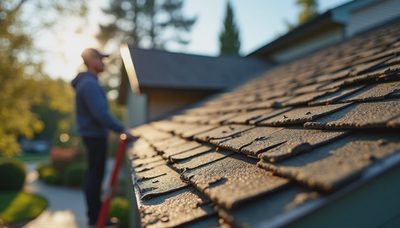
Start outside without climbing onto the roof. Use binoculars to examine the roof plane, ridge, eaves, valleys, and flashing. Photograph the area from the same position on different days. Look for missing shingles, exposed underlayment, rusted metal, lifted flashing, dark stains, and gutters that appear to pull away from the fascia. A sagging roof with fresh storm damage should be documented before temporary work changes the evidence.
Then inspect the attic during daylight, using a flashlight and stable flooring. Do not step between ceiling joists or press on questionable decking. Check for water stains, soft wood, mold-like growth, rusty nails, damp insulation, and daylight around penetrations. A stain can remain after a leak stops, while a dry-looking area can still have hidden decay. Pay special attention after heavy rain, when active entry is easier to identify.
Do not cut open the ceiling or remove shingles just to investigate. If the ceiling is bulging, water is near a light fixture, or framing appears cracked, keep people away from that area and address immediate safety concerns. A sagging roof that is rapidly changing, making sounds, or holding visible water requires prompt professional evaluation.
Repair or Replacement? Read the Scope Closely
A limited repair can make sense when the cause is localized. Examples include replacing a few damaged deck boards, correcting a flashing failure, adding properly designed support, or rebuilding a small section around a chimney. The contractor should explain why the remaining structure is adequate and identify how water intrusion will be stopped.
Replacement becomes more likely when the dip extends across a broad section, multiple layers are present, decking is soft in several locations, or the framing has lost its shape. Installing new shingles over a sagging roof does not correct a structural problem. It can hide the evidence briefly while adding weight and leaving damaged wood underneath.
Ask each bidder to separate tear-off, disposal, decking allowance, underlayment, flashing, ventilation, and labor. A clean quote is not always a complete quote. For a typical U.S. house, a modest roof repair might run from several hundred dollars to a few thousand, while a full replacement commonly reaches the five-figure range depending on size, pitch, access, material, and hidden damage. Older houses often produce wider quote gaps because contractors discover different amounts of decking and flashing work.

Insurance Questions Homeowners Commonly Miss
Home insurance generally responds to sudden, covered causes such as wind or hail, not ordinary wear, deferred maintenance, or gradual deterioration. If a storm removed shingles and water then damaged decking, the policy might address covered parts of the loss, subject to the deductible, exclusions, limits, and claim conditions. A sagging roof that developed slowly over years is usually a different coverage question.
Before filing, photograph the exterior, attic, ceilings, damaged belongings, and any fallen branches. Save inspection notes, invoices for temporary protection, and the date you first noticed the change. Do not authorize a complete tear-off based only on a sales pitch. Ask the contractor to identify visible storm damage separately from age-related wear.
Policies and settlement methods differ. Actual cash value accounts for depreciation, while replacement cost coverage can pay differently when qualifying repairs are completed. Roof age, material, endorsements, and policy language also matter. An adjuster evaluates the loss under the policy; a contractor estimates the work. Those roles should not be treated as interchangeable.
Choosing a Contractor for an Older House
Get at least two detailed inspections, and be cautious when a salesperson recommends replacement without entering the attic or explaining the framing concern. Confirm that the contractor carries general liability and workers compensation coverage, where applicable, and ask for references involving older homes. A roofer who understands plank decking, masonry chimneys, old ventilation layouts, and uneven framing is better prepared for surprises than one who only discusses shingle color.
Compare written scopes line by line. One bid may include a generous decking allowance, new step flashing, ridge ventilation, and permit costs, while another lists only shingles and labor. Ask what happens if the crew finds rotten wood, how added work is priced, whether payment is due before materials arrive, and what workmanship warranty actually covers. Avoid paying the entire amount upfront.
A useful contractor should explain the cause of the sag, show photographs, and distinguish a structural correction from a cosmetic overlay. If the explanation changes whenever you ask about price, slow down. Don’t buy the pitch. Read the roof.
A Practical Next-Step Plan
First, photograph the sag from the ground and record where it appears inside the attic. Second, control active water with a temporary measure that does not damage the roof further. Third, schedule an inspection that addresses decking, rafters, flashing, ventilation, and drainage. Fourth, request itemized bids with repair and replacement options when both are technically reasonable.
Finally, compare the cause, scope, warranty, and total price rather than choosing the lowest headline number. A $2,000 repair that leaves failing framing untouched is not cheaper than a properly planned replacement. Conversely, replacing an entire roof for a small flashing failure wastes money.
A sagging roof deserves attention, but not panic. Find the source, document the condition, and make the contractor explain the structure in plain English. That process gives an older-home owner a much better chance of paying for the work the house actually needs.