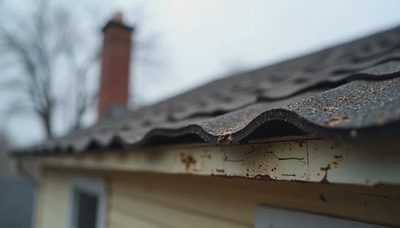
The exterior of an older roof can look only moderately worn while the underside already tells a different story. In many of the houses I examined, the clearest signals that a roof was approaching the end of reliable performance sat in the attic, not on the shingle surface. Darkened decking, repeated moisture trails, insulation that had been wet and dried multiple times, and airflow that had never been adequate often appeared years before the exterior looked dramatic enough to demand immediate action.
I’m Heath Bannister. After more than a decade reviewing residential claims and contractor estimates on older homes, I learned to treat the attic as the more honest reporter. The exterior shows weather and ultraviolet damage. The attic shows how the roof has actually handled water and heat over time. When those interior clues accumulate, full replacement usually becomes the more rational long-term choice even if the shingles still appear serviceable from the ground.
This article outlines the attic conditions I paid attention to most closely.
Darkened or Stained Decking
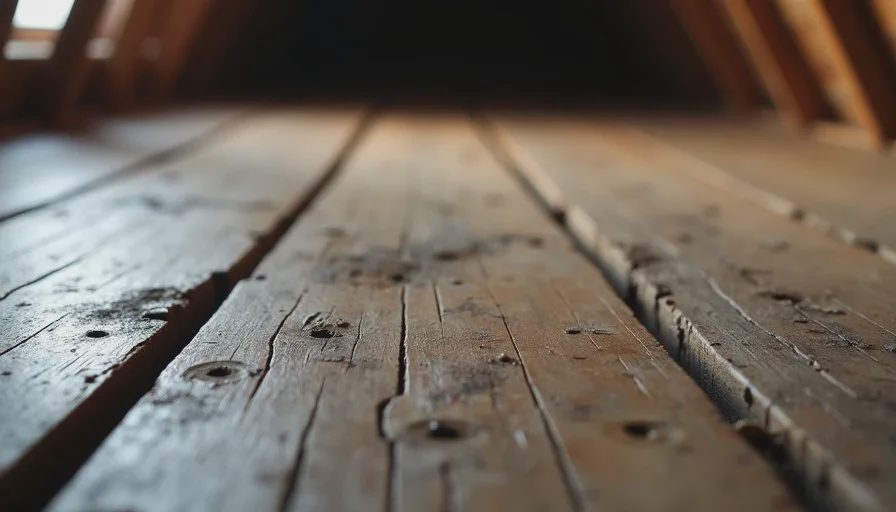
The underside of the roof decking is one of the most useful surfaces in the house. Clean, light-colored wood suggests that moisture has not been a recurring problem. Widespread darkening, especially when it follows the slope of the rafters or spreads around nail penetrations, indicates that water vapor or liquid water has been present for extended periods.
The staining does not have to be actively wet to matter. Wood that has absorbed moisture repeatedly and then dried still loses some of its original strength and nail-holding ability. On older homes the decking is often original board sheathing or early plywood. Once that material has cycled through multiple wetting events, it becomes a less reliable substrate for a new roof. I treated broad, established staining as a stronger signal than a single small spot.
Moisture Trails and Recurring Dampness
Fresh wet spots after rain are urgent. More subtle are the pale trails or tide marks that show water has moved across the wood or insulation in the past. These trails often appear near valleys, below chimney penetrations, or along the lower edges of the roof where water can linger.
When the same locations showed evidence of repeated wetting, the exterior repairs that had been made over the years had clearly not solved the underlying entry points. At that stage, continued patching of the exterior rarely produced lasting dryness in the attic. The pattern itself became evidence that the roof system as a whole was no longer keeping water out consistently.
Insulation Condition as a Secondary Record
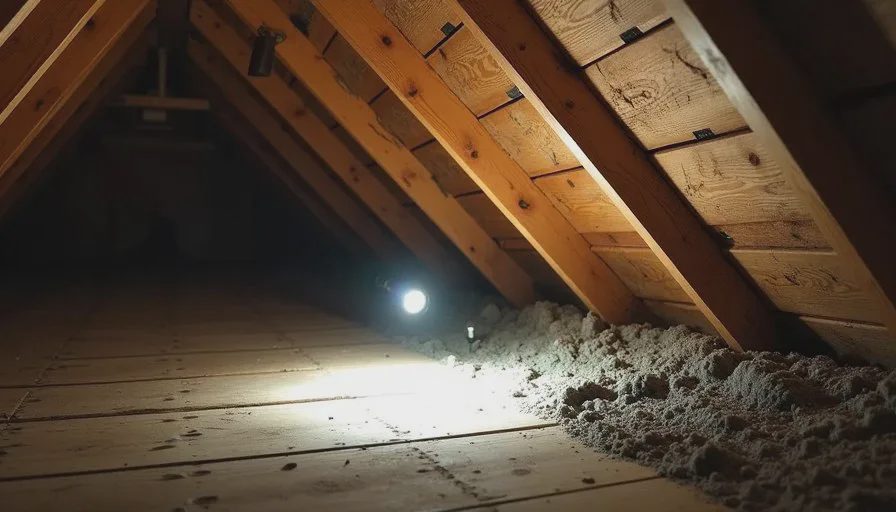
Insulation records moisture history even when the wood has dried. Matted, discolored, or compressed insulation under the roof plane usually means it has been wet at some point. In older attics the insulation is often original or was added in uneven layers. When those layers show repeated moisture exposure, the roof above has been allowing water or condensation to reach the living-space side of the assembly.
I also looked for insulation that had been pushed aside or stained around penetrations and chimney chases. Those details frequently pointed to long-term air and moisture movement that the exterior shingles alone did not reveal.
Daylight and Gaps at the Roof Deck
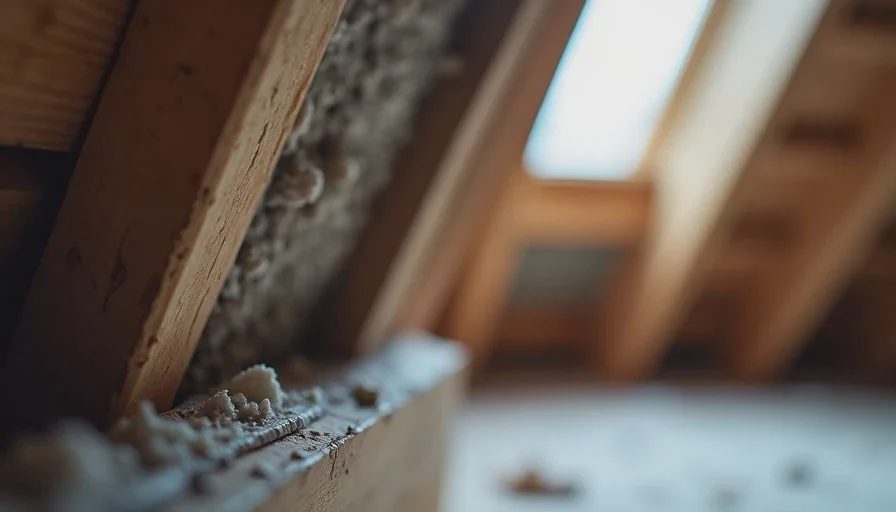
Small amounts of daylight visible from the attic are not always catastrophic, but they are never ideal. Gaps at the ridge, around penetrations, or along the eaves indicate that the roof deck is no longer a continuous plane. On older homes these gaps sometimes result from board shrinkage, previous incomplete repairs, or simply the cumulative movement of a structure that has settled over decades.
When daylight appeared in multiple locations, or when it lined up with interior staining, I treated it as a sign that the roof was no longer performing as a reliable boundary. A new covering installed over an incomplete deck simply inherits the same openings.
Ventilation Failures That Accelerate Everything Else
Poor attic ventilation does not create leaks by itself, yet it magnifies every other problem. Many older homes were built with minimal soffit intake or with exhaust vents that were added later without proper balance. Insulation that blocks the eaves is common. The result is an attic that runs hotter in summer and holds more moisture in winter.
From the attic the signs are straightforward: little or no clear pathway at the eaves, ridge vents that were never properly cut open, and surfaces that feel damp or show condensation staining even when no liquid leak is active. A roof that has spent years in that environment ages faster from the underside. By the time the exterior looks tired, the decking and fasteners have often already been stressed.
When I saw both moisture staining and clearly inadequate ventilation in the same attic, the combination carried more weight than either condition alone. Installing a new roof without correcting the airflow simply shortens the service life of the next covering.
The Relationship Between Attic Clues and Exterior Condition
Exterior signs and attic signs do not always move in perfect parallel. I examined roofs whose shingles still retained reasonable granule coverage while the attic already showed widespread staining and soft decking. I also saw exteriors that looked heavily worn while the attic remained surprisingly dry. The second situation still required attention, but the first situation was the one that most often justified moving toward full replacement rather than continued repair.
The practical implication is simple. An exterior-only inspection is incomplete on an older home. The attic supplies the missing half of the record.
A Practical Attic Inspection Sequence
A useful check does not require specialized equipment. On a clear day, enter the attic with a bright flashlight and a notebook. Move carefully and look at the underside of the decking along each slope. Note the color of the wood, any staining patterns, and whether the staining appears old or recent. Check around every penetration and along the valleys from below if they are visible. Look at the insulation for matting or discoloration. Finally, examine the eaves and ridge for clear ventilation pathways.
Photograph representative areas. Dated images create a baseline that becomes valuable if a contractor or adjuster later needs to understand the pre-existing condition. Write down what you see in plain language while you are still in the space. Memory compresses details; notes do not.
How These Clues Influence the Replacement Decision
Any single attic clue can exist on a roof that still has remaining service life. The stronger case for replacement forms when several clues appear together: widespread darkened decking, evidence of repeated moisture, insulation that has been wet, limited ventilation, and exterior wear that is already advanced. At that point the roof is no longer a collection of isolated problems. It is a system that has reached the limit of reliable performance.
Homeowners who document the attic conditions before soliciting quotes are in a better position to evaluate the scopes that follow. Contractors can then address the actual substrate and airflow rather than pricing a surface replacement that leaves the underlying issues untouched.
Closing the Observation Gap
The exterior of an older roof is only part of the story. The attic often shows the cumulative effect of years of weather, previous repairs, and original construction choices that no longer meet the demands being placed on the roof. Darkened decking, moisture trails, compromised insulation, visible gaps, and inadequate ventilation are the clues that most frequently appear before full replacement becomes the more practical path.
Taking the time to look carefully from below gives a clearer picture than any driveway assessment. The roof will still be there after the inspection, and the information gathered in the attic will remain useful for every decision that follows.